
 Kontakt
 Kako nakupovati
Dostava
Svetovalec pri nakupu
 Angleščina
 118 b
118 b
Do 30 dni za vračilo
Drugi so kupili tudi






 /
/
 Mehka
Mehka
 15.75
€
15.75
€
















 /
Knjiga
46.50
€
/
Knjiga
46.50
€







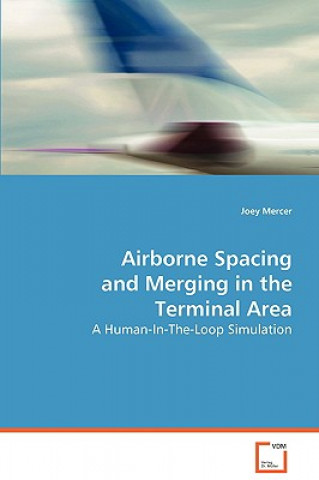
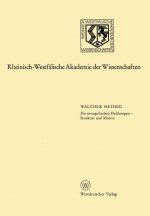
Due to the natural compression of aircraft§decelerating in preparation for landing, current-day§air traffic control operations in terminal areas are§characterized by several clearances, including speed§instructions and heading vectors. These operations§often create excess spacing between consecutive§aircraft, which adds an extra buffer to the safety§margin, but reduces the number of aircraft that can§land at an airport over a period of time. Having§aircraft equipped with advanced cockpit tools that§can utilize Airborne Separation Assistance System§(ASAS) clearances like 'merge-behind-then-follow'§could increase system performance by minimizing§in-trail spacing buffers. Providing air traffic§controllers with Decision Support Tools (DSTs) that§accommodate such a strategy could further improve§system performance. In August 2004, NASA Ames§Research Center conducted a simulation of ASAS§operations. Analyses of the simulation data suggest§that airborne spacing and merging operations are§acceptable to controllers and reduce excess spacing§between aircraft.


O knjigi
Angleščina

Podarite to knjigo še danes
To je povsem preprosto
1 Dodajte knjigo v košarico in izberite dostavo kot darilo 2 V zameno vam bomo poslali kupon 3 Knjiga bo dostavljena na naslov obdarovancaMorda bi vas zanimalo tudi














 /
Mehka
20.08
€
/
Mehka
20.08
€







 /
Mehka
19.88
€
/
Mehka
19.88
€
Pozdravljeni! Sem Libroamiko, vaš knjižni svetovalec.
Kako vam lahko pomagam?