
 Kontakt
 Kako nakupovati
Dostava
Svetovalec pri nakupu
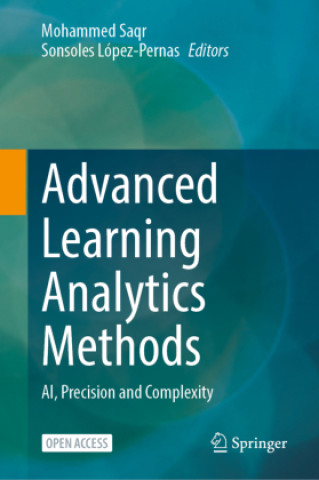
Advanced Learning Analytics Methods
AI, Precision and Complexity
 Angleščina
 118 b
118 b
30 dni za vračilo blaga

This is an open access book.
This important and timely book addresses several novel topics in learning analytics (LA), artificial intelligence (AI) in education at large, and related fields. These topics can be grouped under some overarching themes: advanced LA methods, AI, precision education, and complex systems. The book covers these advanced topics using simple interdisciplinary language without placing unnecessary emphasis on taxonomy, rigid classifications, or jargon. While the book title says advanced LA we make no stress on LA in its narrow definition, and in fact, many chapters and discussions address the educational communities at large and may be of interest to quantitative researchers from any background. The first theme of the book addresses AI and machine learning (ML), which have become increasingly important nowadays. The book introduces several current AI topics, starting with introductory chapters that present these topics in considerable detail to the readers so they can grasp the basic knowledge required to read the dense methodological chapters that come after.
The book then introduces the talk of the town : Large Language Models (LLMs) and Natural Language Processing (NLP). The section introduces the foundational concepts of Large Language Models and their potential applications in education in an introductory chapter. Then, several tutorials cover areas like using LLMs to explain predictive models, code text, and offer insights to researchers about their data.
The third theme of the book covers complex systems, which have become an important part of several disciplines and brought several breakthroughs in modeling intractable problems. Therefore, the book introduces several chapters that cover complex systems methods and different modeling techniques. As is the case with other sections, the book starts with an introduction to the topic written in clear language to acquaint the readers with the topic.
More importantly, the book includes three chapters to introduce Transition Network Analysis (TNA). TNA fills an important gap in modeling the temporal unfolding of the learning process across time from a complex system perspective. What makes TNA unique is that it introduces much-needed rigor. Further, TNA is crafted specifically for educational data, unlike other process-oriented methods, which are adopted from other fields with no emphasis on rigor or validity of inferences.


O knjigi
Angleščina
