
 Kontakt
 Kako nakupovati
Dostava
Svetovalec pri nakupu
 Angleščina
 54 b
54 b
30 dni za vračilo blaga

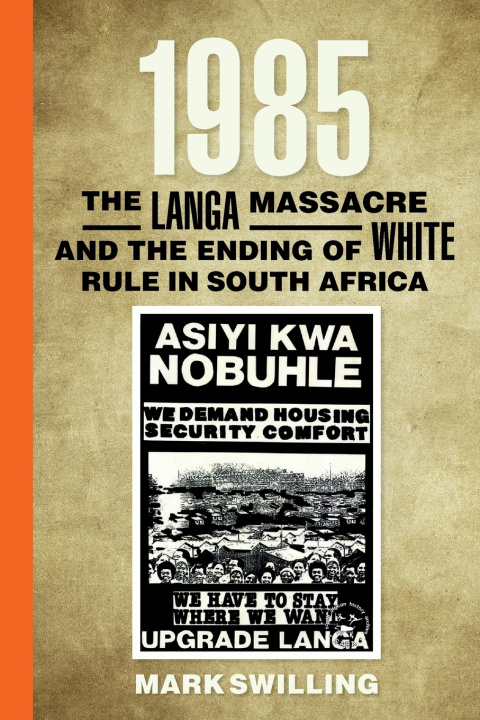
As more authoritarian populist regimes emerge across the developed and developing world, many oppositional democratic movements are debating how best to resist these increasingly violent and racist regimes. Many democratic activists are searching for lessons learnt from similar historical contexts. South Africa in the 1980s is a perfect case in point. Dominated by a militarised authoritarian racist regime, the democratic movements of the time that represented the aspirations of the black majority needed to find ways to organise mass resistance, but also to negotiate democratic alternatives at the local and national levels. The end result was a democratic transition that resulted in the negotiated dismantling of the authoritarian apartheid state without a prolonged civil war. Whereas the mass shootings at Sharpeville in 1960 resulted in the balance of forces shifting decisively in favour of the regime as leaders were jailed and resistance movements banned, 1985 was the year that the tide turned in favour of the mass democratic movement. Four years later, Nelson Mandela was released from prison and four years after that the first non-racial democratic elections took place. The decisive event that marked the turning point was the massacre, on Sharpeville Day, of 31 peaceful protestors on the dusty streets of Langa township in the Eastern Cape town of Uitenhage. This book tells the story of this massacre, including the events that led up to the massacre and then what followed in Uitenhage and nationally. Taken together, it was these events that decisively tipped the balance of forces in favour of the mass democratic movement. They were largely driven by mass actions from below from within South Africa's communities, schools and workplaces. As splits in the white power bloc opened up, so international solidarity via sanctions weakened the regime thus paving the way for an internally negotiated democratic transition. Through the lens of the story of Uitenhage's local struggles, a story is told with many lessons for democratic movements fighting similar battles around the world.
Professor Mark Swilling holds the South African Research Chair in Urban Innovations at the Centre for Sustainability Transitions, Stellenbosch University. He is also a Commissioner on the National Planning Commission in the Office of the President, Republic of South Africa, and a member of the Board of the National Transmission Company of South Africa. Professor Swilling has published widely on urban social movements, governance, urban theory, urbanization in Africa, energy transitions in the global South, sustainability, state capture and more recently on financing transitions. His most recent book was The Age of Sustainability: Just Transitions in a Complex World (Routledge).


O knjigi
Angleščina

Podarite to knjigo še danes
To je povsem preprosto
1 Dodajte knjigo v košarico in izberite dostavo kot darilo 2 V zameno vam bomo poslali kupon 3 Knjiga bo dostavljena na naslov obdarovancaPozdravljeni! Sem Libroamiko, vaš knjižni svetovalec.
Kako vam lahko pomagam?