
 Kontakt
 Kako nakupovati
Dostava
Svetovalec pri nakupu
 Angleščina
 49 b
49 b

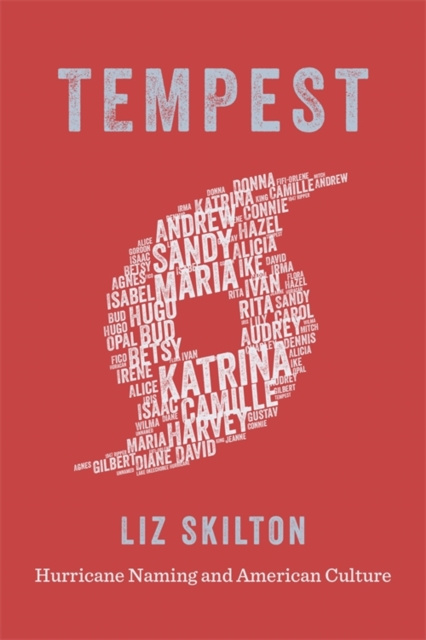
Liz Skilton's innovative study tracks the naming of hurricanes over six decades, exploring the interplay between naming practice and wider American culture. In 1953, the U.S. Weather Bureau adopted female names to identify hurricanes and other tropical storms. Within two years, that convention came into question, and by 1978 a new system was introduced, including alternating male and female names in a pattern that continues today. In Tempest: Hurricane Naming and American Culture, Skilton blends gender studies with environmental history to analyze this often controversial tradition. Focusing on the Gulf South-the nation's "e;hurricane coast"e;-Skilton closely examines select storms, including Betsy, Camille, Andrew, Katrina, and Harvey, while referencing dozens of others. Through print and online media sources, government reports, scientific data, and ephemera, she reveals how language and images portray hurricanes as gendered objects: masculine-named storms are generally characterized as stronger and more serious, while feminine-named storms are described as "e;unladylike"e; and in need of taming. Further, Skilton shows how the hypersexualized rhetoric surrounding Katrina and Sandy and the effeminate depictions of Georges represent evolving methods to define and explain extreme weather events. As she chronicles the evolution of gendered storm naming in the United States, Skilton delves into many other aspects of hurricane history. She describes attempts at scientific control of storms through hurricane seeding during the Cold War arms race of the 1950s and relates how Roxcy Bolton, a member of the National Organization for Women, led the crusade against feminizing hurricanes from her home in Miami near the National Hurricane Center in the 1970s. Skilton also discusses the skyrocketing interest in extreme weather events that accompanied the introduction of 24-hour news coverage of storms, as well as the impact of social media networks on Americans' tracking and understanding of hurricanes and other disasters. The debate over hurricane naming continues, as Skilton demonstrates, and many Americans question the merit and purpose of the gendered naming system. What is clear is that hurricane names matter, and that they fundamentally shape our impressions of storms, for good and bad.


O knjigi
Angleščina
Kategorije

Podarite to knjigo še danes
To je povsem preprosto
1 Dodajte knjigo v košarico in izberite dostavo kot darilo 2 V zameno vam bomo poslali kupon 3 Knjiga bo dostavljena na naslov obdarovancaPozdravljeni! Sem Libroamiko, vaš knjižni svetovalec.
Kako vam lahko pomagam?