
 Kontakt
 Kako nakupovati
Dostava
Svetovalec pri nakupu
 Angleščina
 71 b
71 b

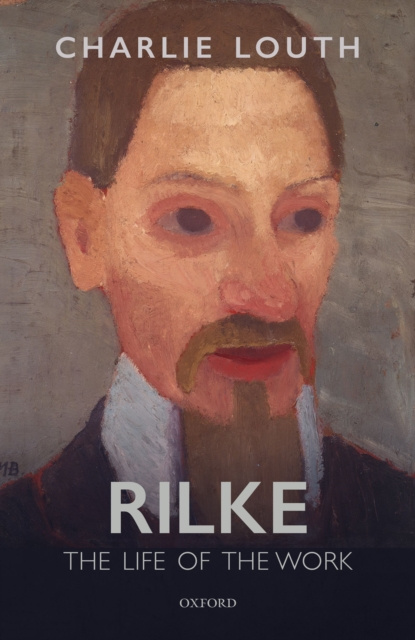
The life of Rilke's work is in its words, and this book attends closely to the development of that life as it unfolds over Rilke's career. What is a poem, and how does it act upon us when we read? This is a question of the greatest interest to Rilke, who addresses it in several poems and for whom the experience of reading affords an interaction with the world, a recalibration of our ways of attending to it, which set it apart from other kinds of experience. Rilke'swork is often approached in periods-he is the author of the Neue Gedichte, or of Malte, or of the Duino Elegies, or of the Sonette an Orpheus-as if the different phases of his work had little to do with one another, but in fact it is a concentrated and evolving exploration of the possibilities ofpoetic language, a working of the life of words into precise and exacting forms in dialogue with the texture of the world. This book traces that trajectory in a series of close readings that do not neglect the lesser-known, uncollected poems and the poems in French, as well as Rilke's activity as a translator of Michelangelo, Shakespeare, Barrett Browning, Mallarm and Valry, among many others. These encounters were part of Rilke's engagement with the world, his way of extending the reach of his language to get it ever closer to the ungraspable movements, the risk and promise, of life itself. One of hisbest-known poems ends with the words 'You must change your life', an injunction that can be seen to animate the whole of his work.


O knjigi
Angleščina
