
 Kontakt
 Kako nakupovati
Dostava
Svetovalec pri nakupu
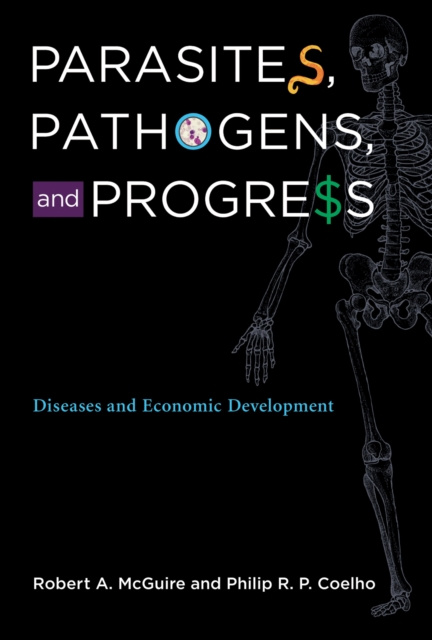
Parasites, Pathogens, and Progress
 Angleščina
 72 b
72 b

The crucial role played by diseases in economic progress, the growth of civilizations, and American history.In Parasites, Pathogens, and Progress, Robert McGuire and Philip Coelho integrate biological and economic perspectives into an explanation of the historical development of humanity and the economy, paying particular attention to the American experience, its history and development. In their path-breaking examination of the impact of population growth and parasitic diseases, they contend that interpretations of history that minimize or ignore the physical environment are incomplete or wrong.The authors emphasize the paradoxical impact of population growth and density on progress. An increased population leads to increased market size, specialization, productivity, and living standards. Simultaneously, increased population density can provide an ecological niche for pathogens and parasites that prey upon humanity, increasing morbidity and mortality. The tension between diseases and progress continues, with progress dominant since the late 1800s.Integral to their story are the differential effects of diseases on different ethnic (racial) groups. McGuire and Coelho show that the Europeanization of the Americas, for example, was caused by Old World diseases unwittingly brought to the New World, not by superior technology and weaponry. The decimation of Native Americans by pathogens vastly exceeded that caused by war and human predation.The authors combine biological and economic analyses to explain the concentration of African slaves in the American South. African labor was more profitable in the South because Africans' evolutionary heritage enabled them to resist the diseases that became established there; conversely, Africans' ancestral heritage made them susceptible to northern "e;cold-weather"e; diseases. European disease resistance and susceptibilities were the opposite regionally. Differential regional disease ecologies thus led to a heritage of racial slavery and racism.


O knjigi
Angleščina

Podarite to knjigo še danes
To je povsem preprosto
1 Dodajte knjigo v košarico in izberite dostavo kot darilo 2 V zameno vam bomo poslali kupon 3 Knjiga bo dostavljena na naslov obdarovancaPozdravljeni! Sem Libroamiko, vaš knjižni svetovalec.
Kako vam lahko pomagam?