
 Kontakt
 Kako nakupovati
Dostava
Svetovalec pri nakupu
 Angleščina
 99 b
99 b

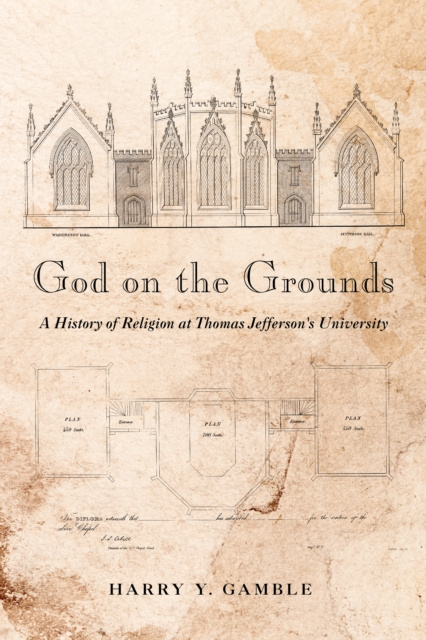
Free-thinking Thomas Jefferson established the University of Virginia as a secular institution and stipulated that the University should not provide any instruction in religion. Yet over the course of the nineteenth century and into the early twentieth, religion came to have aprominent place in the University, which today maintains the largest department of religious studiesofanypublic university inAmerica.Given his intentions, how did Jefferson's university undergo such remarkabletransformations?In God on the Grounds, esteemed religious studies scholar Harry Gamble offers the first history of religions remarkably large roleboth in practice and in studyat UVA. Jeffersons own reputation as a religious skeptic and infidel was a heavy liability to the University, which was widely regarded as injurious to the faith and morals of its students. Consequently, the faculty and Board of Visitors were eager throughout the nineteenth century to make the University more religious. Gamble narrates the early, rapid, and ongoing introduction of religion into the Universitys life through the piety of professors, the creation of the chaplaincy, the growth of the YMCA, the multiplication of religious services and meetings, the building of a chapel, and the establishment of a Bible lectureship and a School of Biblical History and Literature. He then looks at howonly in the mid-twentieth centurythe University began to retreat from its religious entanglements and reclaim its secular character as a public institution. A vital contribution to the institutional history of UVA, God on the Grounds sheds light on the history of higher education in the United States, American religious history, and the development of religious studies as an academic discipline.


O knjigi
Angleščina
Kategorije

Podarite to knjigo še danes
To je povsem preprosto
1 Dodajte knjigo v košarico in izberite dostavo kot darilo 2 V zameno vam bomo poslali kupon 3 Knjiga bo dostavljena na naslov obdarovancaPozdravljeni! Sem Libroamiko, vaš knjižni svetovalec.
Kako vam lahko pomagam?