
 Kontakt
 Kako nakupovati
Dostava
Svetovalec pri nakupu
 Angleščina
 283 b
283 b

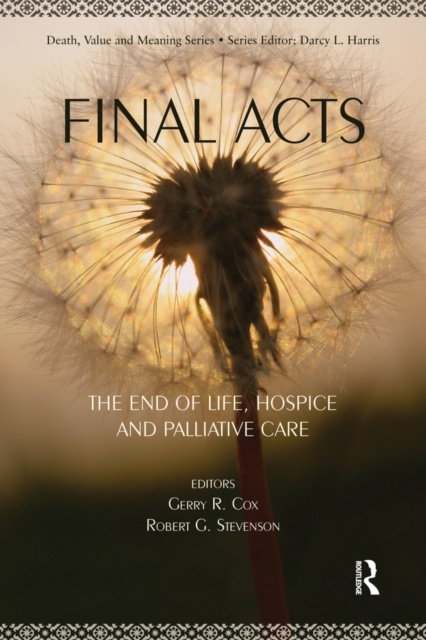
The editors undertook this project to promote the International Conference on Death, Grief, and Bereavement in La Crosse, Wisconsin, USA. Throughout its history, the conference has attracted internationally known speakers. This book illustrates the quality of their presentations. Section One, "e;Professional Applications in End of Life Care,"e; begins with Currier, Hammer, and Neimeyer's examination of the importance of the social network, including both religion and family, not just the individual, in working with those at the end of their lives. The authors analyse the impact of social support and its health implications. In Chapter 2, Parkes looks at the influence of child development on adult life and bereavement. Rather than simply showing how insecure child development affects loss as adults, he examines how insecure attachments in childhood can lead to extreme attachments to God, homes, territories, political leaders, and symbols and discusses interventions for these extreme attachments. Papadatou (Chapter 3) develops a model for professionals and caregivers who work with the dying. She suggests that those who give care to the dying also have multiple needs and also face suffering, examines the private world of professionals and what is healthy and what is unavoidable, and describes both functional and dysfunctional coping patterns used by professionals. Kobler (Chapter 4) uses case studies to explain how to develop and maintain relationships with children and their families in paediatric palliative care. She offers strategies for using rituals and ways to initiate and maintain relationships with children and their families. Thompson (Chapter 5) focuses on the effects of working in situations involving high levels of emotion and the stress that may result. He makes a strong case that such stress can do harm to individuals, groups, and whole organisations and offers a model for a more holistic approach that incorporates social and organisational strategies and practical ways to prevent and manage stress. Eves-Baine and colleagues (Chapter 6) examine the application of paediatric and adult-based principles to the newborn period. They discuss how to create the best situations for families when life-sustaining medical therapy has been withdrawn, how to support the family, and the ethical challenges that perinatal palliative care presents. The authors offer models for care through the journey of palliative and bereavement care. Section Two, "e;Facing End of Life and Its Care,"e; begins with Gilbert's chapter presenting a strong argument that caregivers need to honour the multiple tracks that come with dying while maintaining a focus on the wishes of the dying person. He offers ways for the team to better meet the needs of the dying person. Koppleman (Chapter 8) follows the journey of a friend who faced death. It is a powerful story, told from the point of view of the dying in a scholarly fashion. Smith and Potter (Chapter 9) suggest that palliative care for the dying can be defined as offering "e;comfort care,"e; both for those who are dying and for their loved ones. The authors present a model of the psycho-spiritual side of palliative care as a way of offering comfort to all those involved. Adams (Chapter 10) examines different methods of working with patients and families. It looks at the ways in which such work can be complicated by factors of geographic distance, differences in family reactions, differences in treatment plan concepts, and in meaning making. All of these factors may become stumbling blocks and may prevent the delivery of positive support. Pizzini (Chapter 11) looks at the experience of dying in prison from the perspective of inmates who are terminally ill, prison medical staff, and prison security staff. She discusses how to maintain dignity of the dying and a "e;good death"e; while in prison. McCord (Chapter 12) discusses attempts by hospice patients and others diagnosed with terminal illnesses to die either by their own hand or with physician assistance. She presents common risk factors, strategies to assess the degree of risk and possible plans for suicide and suicide postvention in the context of hospice. Section Three, "e;Cultural Considerations in End-of-Life Care"e; begins with The End of Life: Two Perspectives in which Robert G. Stevenson looks at two perspectives on the end of life that are not often examined in terms of their impact on the individual and his/her attitude toward this time. The two perspectives are that of adolescents, and that are shown in a military ceremony used in the 18th and 19th centuries, the Feu de Joie or Fire of Joy. In Chapter Fourteen, Janet McCord discusses suicide attempts by hospice patients and others diagnosed with terminal illnesses to die either by their own hand or with physician assistance. Connor's description of the need for hospice and ...


O knjigi
Angleščina

Podarite to knjigo še danes
To je povsem preprosto
1 Dodajte knjigo v košarico in izberite dostavo kot darilo 2 V zameno vam bomo poslali kupon 3 Knjiga bo dostavljena na naslov obdarovancaPozdravljeni! Sem Libroamiko, vaš knjižni svetovalec.
Kako vam lahko pomagam?