
 Kontakt
 Kako nakupovati
Dostava
Svetovalec pri nakupu
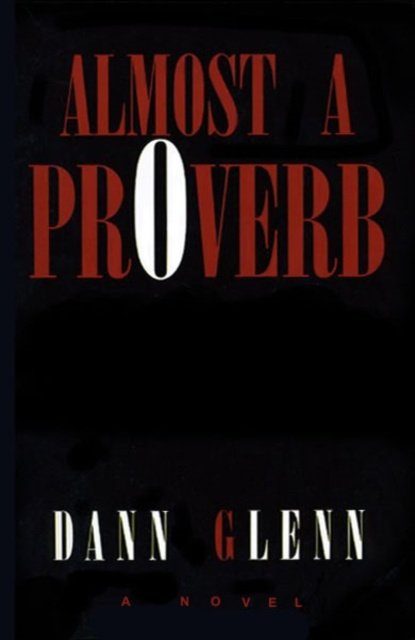
Almost A Proverb
 Angleščina
 42 b
42 b

From the first words of this book the reader is yanked out of their lethargic postmodern complacency and forced to confront the hard-core reality of the world (s) he inhabits. As a gripping and honest chronicle of war and warriors, Almost a Proverb takes its place in the long Western tradition of epic war narrative that began with Homer's Iliad. It is, however, a very different sort of war story. Of war, much has already been written; indeed, it seems to be the central myth of our culture. Perhaps it is the case, as Chris Hedges asserts, that "e;war is a force that gives us meaning"e; (one wonders-and perhaps not idly-how different our culture might now be if a matriarchal peace ethos was instead the core value of our society). There has been more written about the American War in Vietnam than any other war to date-histories, soldier's memoirs, fiction, poetry, dissections of strategy and politics, propagandist tracts, biographies, analyses of battles and catalogues of equipment-a vast sea of writings that span a continuum from the most erudite scholarship to the most lurid war porn imaginable. Sometimes-more often than we would like to think-the former becomes indistinguishable from the latter, and we forget that when one speaks of war, (s)he speaks of real human beings suffering in the most extreme and horrific circumstances. The war narrative sings of blood, death, fire, steel, trauma, degradation, privation, grief, berserk rage, killing of innocents, shattered lives. It speaks as well of the profound, enduring love that grows between comrades, the finding of identity and self-and its preservation-under the most adverse conditions. Why yet another Vietnam book, almost thirty years after war's end? Exactly because we as a species remain collectively poised on the brink of our own violent destruction, and because we still (apparently) have not learned the lessons of Vietnam, even as American forces sink into new quagmires in the Middle East. Besides those of us old enough to have lived through the war years and their aftermath, there are new generations who know little to nothing of this war or any other, save the often propagandistic distortions of war and history produced by Hollywood. Yet the war's ghosts move among us still, and the tale must be told anew, over and over. America as a nation has yet to come to terms with this brutal conflict. What we require are war narratives that do not flinch from conveying the absolute horror of modern war and our often perverse attraction to it. We need narratives that chronicle honestly the sufferings of war's participants and victims, and allow us to identify with them, narratives that expose the corruption and folly of those who orchestrate and instigate war, stories and vivid re-memberings that compel us to recall with dignity and honor those who have served and fallen, without seeking to glorify war-making. The true war narrative leaves us shattered, stammering, floundering in our attempts to make some sort of sense out of the purest madness. Vietnam veteran Tim O'Brien writes in The Things We Carried that "e;A true war story is never moral. It does not instruct, nor encourage virtue... if at the end of a war story you feel uplifted, or if you feel that some small bit of rectitude has been salvaged from the larger waste, then you have been made the victim of a very old and terrible lie,"e; the ancient lie told to "e;children ardent for some desperate glory,"e; the wretched dulce et decorum est pro patria mori that Wilfred Owen's war poetry deplores. O'Brien continues, "e;There is no rectitude whatsoever. There is no virtue. As a first rule of thumb, therefore, you can tell a true war story by its absolute and uncompromising allegiance to obscenity and evil."e; Hence, almost a proverb. There is no grand truth to be salvaged from the hell of Vietnam, no redeeming meta-narrative, no cheap justification for the suffering; there is only an honest accounting to be made from multiple perspectives, and especially, by those who were there, the "e;ground-pounders"e; doing the killing and the dying, and those on both sides who lived through it. Dann Glenn, a veteran of combat in 1969-70 with the Army's 101st Airborne Division in Vietnam's notoriously unforgiving A Shau Valley-best known by the bloody battle in May 1969 for "e;Hamburger Hill"e; (a pointless, brutal, near-suicidal uphill slog to dislodge a well-entrenched, well-armed and determined foe, only for the military and political leaders to almost immediately order the abandonment of territory gained at the expense of so many young lives)-has managed to chronicle anew the life-and deaths-of the infantry soldier in Vietnam with a fresh intensity, in a manner that both depicts the pure absurdity and cruelty of the war while acknowledging the tremendous sacrifices and sufferings of its participants and victims in a most humane and engaging way. In truth, the war made vi ...


O knjigi
Angleščina

Podarite to knjigo še danes
To je povsem preprosto
1 Dodajte knjigo v košarico in izberite dostavo kot darilo 2 V zameno vam bomo poslali kupon 3 Knjiga bo dostavljena na naslov obdarovancaPozdravljeni! Sem Libroamiko, vaš knjižni svetovalec.
Kako vam lahko pomagam?